

Learn all about Complete Guide to Secretary Bird in this comprehensive guide. Discover the best time to go, what to see, and how to plan your trip.
Introduction to Complete Guide to Secretary Bird
When it comes to complete guide to secretary bird, experienced safari travelers know that preparation makes all the difference. Africa's diverse landscapes and ecosystems offer unique opportunities, and knowing what to expect helps you make the most of every moment on safari.
Key Details and Considerations
Several critical factors influence complete guide to secretary bird in the African safari context. Geographic location, time of year, and the specific activities you're interested in all play important roles. The diversity of Africa's safari destinations means that no two experiences are alike, and understanding these nuances helps you plan more effectively. Our destination guides provide detailed information for each region.
Still researching? Let us help.
Our advisory team has planned safaris across 9 African countries. We can turn your research into a real plan.
Talk to an AdvisorPractical Advice
For practical guidance on complete guide to secretary bird, consider these expert recommendations. First, start your research early and use reliable sources like our knowledge center for up-to-date information. Second, don't underestimate the value of professional guidance, as a knowledgeable safari planning guide can save you time, money, and potential disappointment. Third, remain flexible in your planning, as Africa's natural environments are dynamic and unpredictable.
Expert Insights
Industry experts emphasize that complete guide to secretary bird continues to evolve as safari tourism grows and adapts to new challenges. Conservation-focused tourism, community engagement, and sustainable practices are increasingly important considerations for discerning travelers. By choosing operators who prioritize these values, you contribute to the long-term preservation of Africa's wild places. Browse our operator directory to find companies committed to responsible tourism.
Planning Your Next Steps
In summary, complete guide to secretary bird is a multifaceted topic that rewards careful study and thoughtful planning. Whether you're a first-time safari traveler or a returning enthusiast, staying informed about the latest developments and best practices ensures the best possible experience. Explore our destinations, consult our safari operators, and use our cost calculator to begin planning your African adventure today.
Done Reading? Let's Build Your Safari.
Skip the guesswork. Work with an advisor who has been on the ground across East and Southern Africa.
Plan With UsA Master of the Savanna: Unpacking the Secretary Bird's Hunting Prowess
The Secretary Bird is a formidable predator, renowned for its dramatic and highly effective hunting techniques. Unlike most birds of prey that hunt from the air, the Secretary Bird is primarily terrestrial, conducting its hunts on foot. This ground-based approach, combined with its sheer power, makes it a master of the African savanna.
Their primary hunting strategy involves a relentless and powerful stomp. When a Secretary Bird locates its prey—often a snake, lizard, or large insect—it will deliver a series of rapid, forceful kicks with its long, crane-like legs. The force of these kicks is astonishing, capable of delivering a blow five times the bird's own body weight, stunning or killing the prey almost instantly. This powerful stomp is not just for subduing prey; it's also a defensive measure, particularly when hunting venomous snakes. The bird's quick, precise strikes are designed to crush the snake's skull before it has a chance to bite.
> Expert Insight: The Secretary Bird's scientific name, Sagittarius serpentarius, translates to "the archer of snakes," a fitting title for this expert serpent hunter. While they are famous for hunting snakes, their diet is actually quite varied and includes insects, lizards, rodents, and even the young of other birds.
In addition to their powerful kicks, Secretary Birds employ a clever use of their wings and tail feathers. During a hunt, they will often fan out their wings and shake their tail feathers to distract and confuse their prey. This display can also make the bird appear larger and more intimidating, further unsettling their target. When facing a venomous snake, the bird uses its wings as a shield, deflecting any potential strikes while it positions itself for the final, lethal stomp.
Where to Find the Secretary Bird: Habitat and Distribution
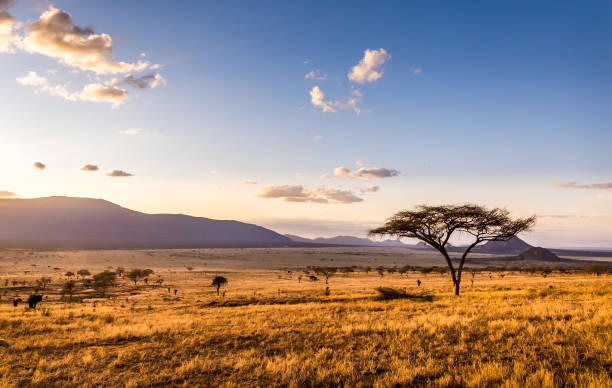
The Secretary Bird is endemic to Africa and can be found in over 30 sub-Saharan countries, from Mali in the west to South Africa in the south. They thrive in open environments and are most commonly found in short, open grasslands, savannas, and scrublands with scattered acacia trees, which they use for roosting and nesting.
These birds are not typically found in dense forests or extremely arid deserts, as their hunting style requires open ground to effectively pursue their prey. They are often attracted to recently burned areas where prey is more exposed and easier to spot. While they are widespread, their populations are often localized, and sightings can be a special highlight of any safari.
Some of the best places to spot Secretary Birds on safari include:
- Serengeti National Park, Tanzania: The vast, open plains of the Serengeti are prime habitat for Secretary Birds. They can often be seen striding through the grasslands in search of a meal.
- Maasai Mara National Reserve, Kenya: Similar to the Serengeti, the Maasai Mara offers excellent opportunities to see these magnificent birds in their natural environment.
- Kruger National Park, South Africa: The mix of savanna and open woodland in Kruger provides an ideal habitat for Secretary Birds.
- Etosha National Park, Namibia: The open salt pans and surrounding grasslands of Etosha are another excellent location for spotting these birds.
> Traveler's Tip: When on safari, keep an eye out for Secretary Birds in the early morning and late afternoon when they are most active. They are often seen in pairs, so if you spot one, there is a good chance its partner is nearby. A good pair of binoculars is essential for getting a closer look at these fascinating birds without disturbing them.
An Emblem of the Savanna: Cultural Significance and Symbolism
The Secretary Bird's striking appearance and powerful presence have made it a significant cultural symbol in several African nations. It is the national emblem of both Sudan and South Africa and appears on the coat of arms of both countries. In these contexts, the Secretary Bird symbolizes protection, strength, and the triumph of good over evil—a nod to its snake-hunting prowess.
Its name is also a subject of interest and debate. The most widely accepted theory is that the name "Secretary Bird" comes from the crest of long, black feathers on the back of its head, which resemble the quill pens that 19th-century secretaries used to tuck behind their ears. This distinctive feature, combined with its long, dark "trousers" of feathers, gives the bird a formal, almost human-like appearance.
Conservation Status: A Call to Action
Despite its wide distribution and cultural significance, the Secretary Bird is facing a precarious future. In 2020, the IUCN (International Union for the Conservation of Nature) up-listed the Secretary Bird's conservation status from Vulnerable to Endangered. This change reflects a rapid and severe decline in its population across its range.
The primary threats to the Secretary Bird are habitat loss and degradation. The conversion of grasslands and savannas for agriculture, urbanization, and overgrazing by livestock is shrinking their available habitat and reducing the availability of their prey. Other threats include collisions with power lines and fences, and disturbance of their nesting sites.
As a traveler, you can play a role in the conservation of this iconic species. By choosing to go on safari with responsible operators who support conservation efforts, you are contributing to the protection of the habitats that the Secretary Bird and other wildlife depend on. To learn more about how you can make a positive impact, visit our knowledge center or speak with one of our safari operators.
Your journey to Africa can be more than just a vacation; it can be a force for good. By planning your safari with care and intention, you can help ensure that future generations will also have the opportunity to witness the majesty of the Secretary Bird. Start planning your conservation-focused safari today by visiting our plan your safari page or using our cost calculator to explore your options.
Need Expert Safari Guidance?
Get expert advisory support from a firm founded by a former safari guide — with real operational knowledge across 9 African countries and full-journey accountability.
Related Planning Guides
Explore Related Topics
Recommended Reading
 Wildlife Guides
Complete Guide to Weaver Bird Nests
Learn all about Complete Guide to Weaver Bird Nests in this comprehensive guide. Discover the best time to go, what to see, and how to plan your trip.
 Wildlife Guides
Complete Guide to African Lion Behavior
Delve into the complex social structure, hunting techniques, and communication methods of the African lion. Understand the king of the savanna with this in-depth guide.
 Wildlife Guides
Complete Guide to Cheetah Speed and Hunting
Learn all about Complete Guide to Cheetah Speed and Hunting in this comprehensive guide. Discover the best time to go, what to see, and how to plan your trip.
 Destination Guides
Complete Guide to Table Mountain National Park
A complete guide to Complete Guide to Table Mountain National Park. Learn about the wildlife, activities, and best time to visit this amazing destination.
 Destination Guides
Complete Guide to Garden Route Safari Options
A complete guide to Complete Guide to Garden Route Safari Options. Learn about the wildlife, activities, and best time to visit this amazing destination.
 Destination Guides
Complete Guide to Sabi Sands Game Reserve
A complete guide to Complete Guide to Sabi Sands Game Reserve. Learn about the wildlife, activities, and best time to visit this amazing destination.