
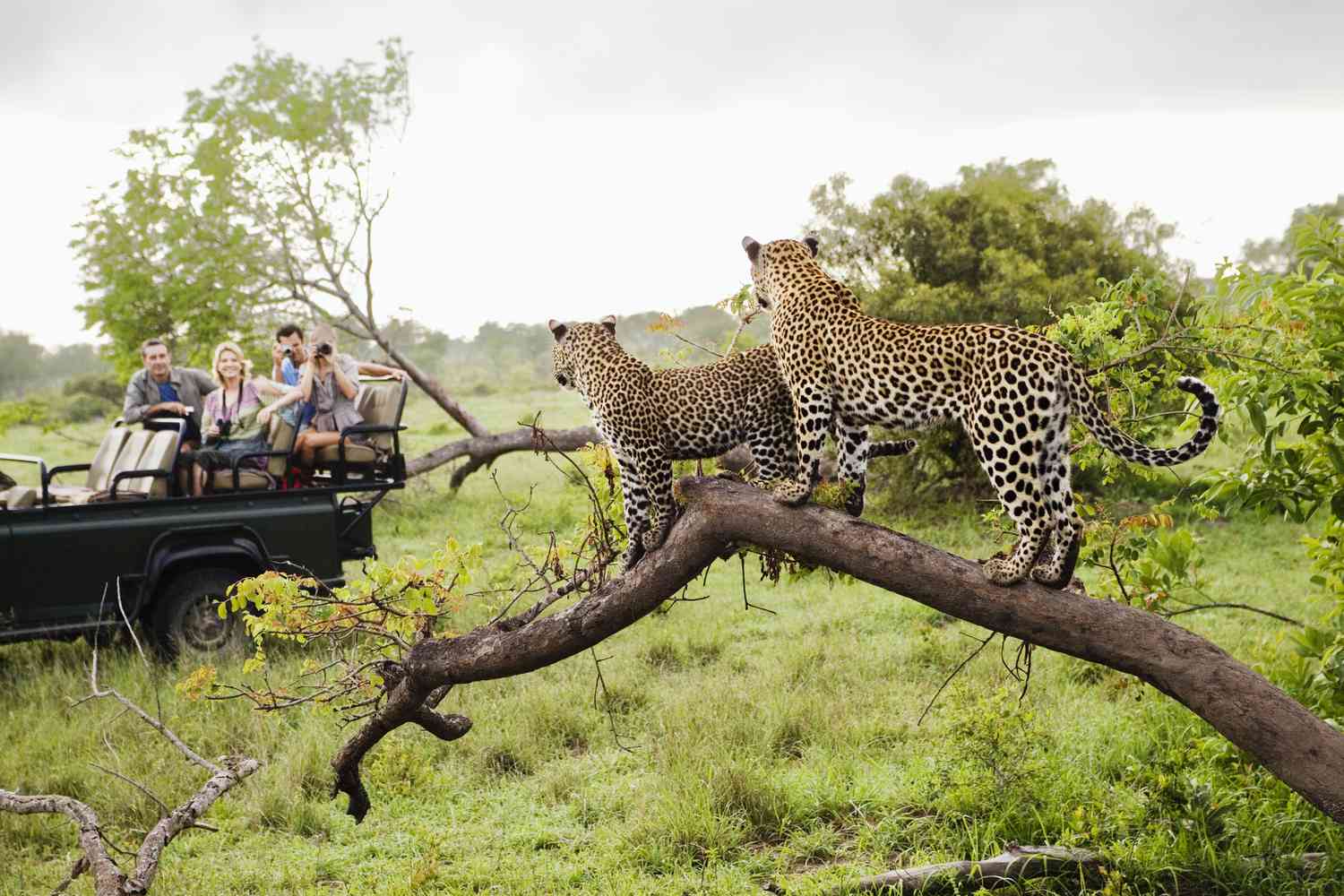
Learn all about Complete Guide to Black-Backed Jackal in this comprehensive guide. Discover the best time to go, what to see, and how to plan your trip.
Introduction to Complete Guide to Black-Backed Jackal
Understanding complete guide to black-backed jackal is essential for anyone planning a safari in Africa. This topic encompasses a range of considerations that can significantly impact your travel experience, from practical logistics to wildlife encounters that create lasting memories.
Key Details and Considerations
Delving deeper into complete guide to black-backed jackal, travelers discover that Africa's safari industry has evolved significantly over the past decades. Modern safari experiences combine traditional wilderness exploration with contemporary comfort and conservation awareness. The key is finding the right balance for your travel style and budget, which our cost calculator can help you determine.
Still researching? Let us help.
Our advisory team has planned safaris across 9 African countries. We can turn your research into a real plan.
Talk to an AdvisorPractical Advice
Putting your knowledge of complete guide to black-backed jackal into practice requires a systematic approach. Begin by defining your priorities and non-negotiables, then research destinations and operators that align with your vision. Our operator directory features thousands of safari companies across 17 African countries. Compare options carefully, read reviews, and don't hesitate to ask detailed questions before committing to a booking.
Expert Insights
Industry experts emphasize that complete guide to black-backed jackal continues to evolve as safari tourism grows and adapts to new challenges. Conservation-focused tourism, community engagement, and sustainable practices are increasingly important considerations for discerning travelers. By choosing operators who prioritize these values, you contribute to the long-term preservation of Africa's wild places. Browse our operator directory to find companies committed to responsible tourism.
Planning Your Next Steps
To wrap up, mastering complete guide to black-backed jackal is an investment that pays dividends throughout your safari journey. The more you understand about Africa's diverse ecosystems, wildlife, and tourism infrastructure, the better equipped you'll be to make decisions that lead to extraordinary experiences. Start your planning journey with our comprehensive knowledge center and connect with our team of experienced safari operators for personalized guidance.
Done Reading? Let's Build Your Safari.
Skip the guesswork. Work with an advisor who has been on the ground across East and Southern Africa.
Plan With UsSocial Structure and Family Life
Black-backed jackals are highly social animals, known for their strong family bonds and cooperative behavior. They are monogamous, with pairs often mating for life. This lifelong partnership is the foundation of their social structure, creating a stable environment for raising young and defending territory.
A typical jackal family unit consists of the breeding pair and their offspring. Interestingly, some of the previous year's pups may stay with the family to act as "helpers." These helpers play a crucial role in the survival of the new litter by assisting with feeding, grooming, and guarding the pups. This cooperative breeding strategy significantly increases the chances of pup survival, showcasing a level of social complexity not always seen in canids.
Territory is vital for a jackal family, and they will defend it vigorously against intruders. They mark their territory using urine and feces, and will vocalize to warn off other jackals. The characteristic howling of a jackal, often heard at dusk and dawn, serves as a declaration of their presence and a warning to rivals. These vocalizations can be surprisingly complex, with different calls used for different situations.
> Expert Insight: The presence of helpers in a black-backed jackal family is a fascinating example of kin selection. By helping to raise their siblings, the older offspring are indirectly ensuring the survival of their own genes. This altruistic behavior is a key factor in the success of this species.
Within the family, there is a clear hierarchy, with the breeding pair being dominant. The interactions between family members are generally amicable, with a great deal of social grooming and play. This helps to strengthen the bonds between individuals and maintain a cohesive family unit. For those on safari, observing these interactions can be a rewarding experience, offering a glimpse into the intricate social lives of these adaptable animals.
Diet and Hunting Techniques
Black-backed jackals are the ultimate opportunists, with a varied and adaptable diet that allows them to thrive in a wide range of environments. They are omnivores, and their menu can include everything from small mammals, birds, and reptiles to insects, fruits, and carrion. This dietary flexibility is a key reason for their success across much of sub-Saharan Africa.
When hunting, black-backed jackals are intelligent and resourceful. They often hunt alone or in pairs, using their keen senses of hearing and smell to locate prey. A common hunting technique is to pounce on small rodents and insects in a cat-like manner. For larger prey, such as young gazelles or impalas, a pair of jackals may work together to isolate and bring down the animal. Their intelligence is also demonstrated in their ability to follow larger predators, like lions or leopards, and scavenge from their kills.
> Traveler's Tip: When you spot a black-backed jackal on safari, take a moment to observe its behavior. Is it actively hunting, or is it patiently waiting for an opportunity to scavenge? Watching their feeding strategies can provide a fascinating insight into their role in the ecosystem. You can learn more about safari etiquette and wildlife viewing in our knowledge center.
In agricultural areas, black-backed jackals have been known to prey on young livestock, which has unfortunately led to conflict with humans. However, their role in controlling rodent and insect populations is also a significant benefit to farmers. This complex relationship highlights the challenges of human-wildlife coexistence in many parts of Africa.
Where and When to See Black-Backed Jackals
Black-backed jackals are widely distributed across two separate regions of Africa: one in East Africa, covering countries like Kenya, Tanzania, and Ethiopia, and another in Southern Africa, encompassing South Africa, Namibia, Botswana, and Zimbabwe. They are adaptable and can be found in a variety of habitats, from open savannas and woodlands to arid deserts and even in close proximity to human settlements.
Some of the best places to see black-backed jackals include:
- Serengeti National Park, Tanzania: The vast plains of the Serengeti are an ideal habitat for jackals, and they are frequently seen here, often trailing prides of lions in the hope of scavenging a meal.
- Etosha National Park, Namibia: The arid environment of Etosha is home to a healthy population of black-backed jackals. They are often seen around the park's waterholes, particularly during the dry season.
- Kruger National Park, South Africa: As one of Africa's most famous parks, Kruger offers excellent opportunities to see a wide variety of wildlife, including the black-backed jackal.
- Central Kalahari Game Reserve, Botswana: This vast and remote reserve is a stronghold for the species, and sightings are common.
Black-backed jackals are most active during the early morning and late afternoon, as well as at night. While they can be seen at any time of day, your chances of a good sighting are best during these cooler hours. Their distinctive calls are also most frequently heard at dusk and dawn. To maximize your chances of seeing these fascinating animals, consider a safari that includes a mix of game drives at different times of the day. Our team of safari operators can help you plan the perfect itinerary.
Conservation Status and Threats
The black-backed jackal is currently listed as a species of "Least Concern" by the International Union for Conservation of Nature (IUCN). This is due to their widespread distribution, adaptability, and stable population numbers. However, they do face a number of threats, primarily from humans.
In many agricultural areas, black-backed jackals are persecuted as pests due to their occasional predation on livestock. They are often trapped, poisoned, or shot by farmers. While this can have a significant impact on local populations, it does not appear to be a major threat to the species as a whole.
Habitat loss and fragmentation are also a concern in some areas, as human populations expand and convert natural habitats to agriculture and settlements. However, the black-backed jackal's ability to adapt to a variety of environments, including those modified by humans, has allowed them to persist in many areas where other species have declined.
> Expert Insight: The success of the black-backed jackal is a testament to its intelligence and adaptability. However, it is important to remember that all wildlife faces challenges in a changing world. Responsible tourism plays a vital role in supporting conservation efforts and ensuring that future generations can continue to enjoy the incredible biodiversity of Africa. You can learn more about how to travel responsibly in our knowledge center.
By understanding the threats facing black-backed jackals and supporting conservation initiatives, we can help to ensure that these resilient and fascinating animals continue to thrive in the wild. If you are interested in planning a safari that supports conservation, our safari operators can recommend operators and destinations that are committed to responsible tourism.
Need Expert Safari Guidance?
Get expert advisory support from a firm founded by a former safari guide — with real operational knowledge across 9 African countries and full-journey accountability.
Related Planning Guides
Explore Related Topics
Recommended Reading
 Wildlife Guides
Complete Guide to Black Rhinoceros Conservation
Learn all about Complete Guide to Black Rhinoceros Conservation in this comprehensive guide. Discover the best time to go, what to see, and how to plan your trip.
 Wildlife Guides
Complete Guide to Side-Striped Jackal
Learn all about Complete Guide to Side-Striped Jackal in this comprehensive guide. Discover the best time to go, what to see, and how to plan your trip.
 Wildlife Guides
Complete Guide to Black Mamba
A comprehensive guide to Complete Guide to Black Mamba. Learn about its habitat, behavior, diet, and conservation status.
 Destination Guides
Complete Guide to Table Mountain National Park
A complete guide to Complete Guide to Table Mountain National Park. Learn about the wildlife, activities, and best time to visit this amazing destination.
 Destination Guides
Complete Guide to Garden Route Safari Options
A complete guide to Complete Guide to Garden Route Safari Options. Learn about the wildlife, activities, and best time to visit this amazing destination.
 Destination Guides
Complete Guide to Sabi Sands Game Reserve
A complete guide to Complete Guide to Sabi Sands Game Reserve. Learn about the wildlife, activities, and best time to visit this amazing destination.