
Should you stay in a safari lodge or a tented camp? This guide compares atmosphere, comfort, wildlife access, cost, and experience to help you choose the right safari accommodation.
Why Your Accommodation Choice Matters
Choosing where to stay on safari is one of the most important decisions you will make during the planning process. Your accommodation shapes the entire experience — not just where you sleep, but how close you feel to the wilderness, what activities are available, and how your days unfold. The two most common options across African safari destinations are permanent safari lodges and tented camps. Both can deliver exceptional experiences, but they do so in fundamentally different ways.
This guide breaks down the key differences between lodges and tented camps across the factors that matter most: atmosphere, comfort, wildlife access, cost, and the overall experience. Whether you are planning your first safari or returning for another trip, understanding these differences will help you make a choice that matches your travel style and expectations.
What Is a Safari Lodge?
A safari lodge is a permanent structure built from brick, stone, timber, or a combination of materials. Lodges range from simple, functional buildings to architectural masterpieces that blend seamlessly into the landscape. They typically offer hotel-style amenities including solid walls, proper windows, air conditioning or heating, and en-suite bathrooms with full plumbing.
Larger lodges may have 20 to 50 rooms, multiple dining areas, a swimming pool, a spa, a gift shop, and conference facilities. Smaller boutique lodges might have as few as six to ten rooms, offering a more intimate experience while still providing the structural permanence that defines the lodge category.
The key advantage of a lodge is predictability and comfort. You know what you are getting: a solid roof, climate control, reliable hot water, and a clear boundary between your living space and the wilderness outside. For travelers who value these comforts — particularly those who are new to safari or traveling with children or older family members — a lodge provides reassurance and familiarity.
Some of Africa's most celebrated lodges include properties in the Sabi Sands adjacent to Kruger, the crater rim lodges overlooking Ngorongoro, and the clifftop lodges of Victoria Falls. These properties combine world-class service with locations that deliver extraordinary wildlife viewing.
Still researching? Let us help.
Our advisory team has planned safaris across 9 African countries. We can turn your research into a real plan.
Talk to an AdvisorWhat Is a Tented Camp?
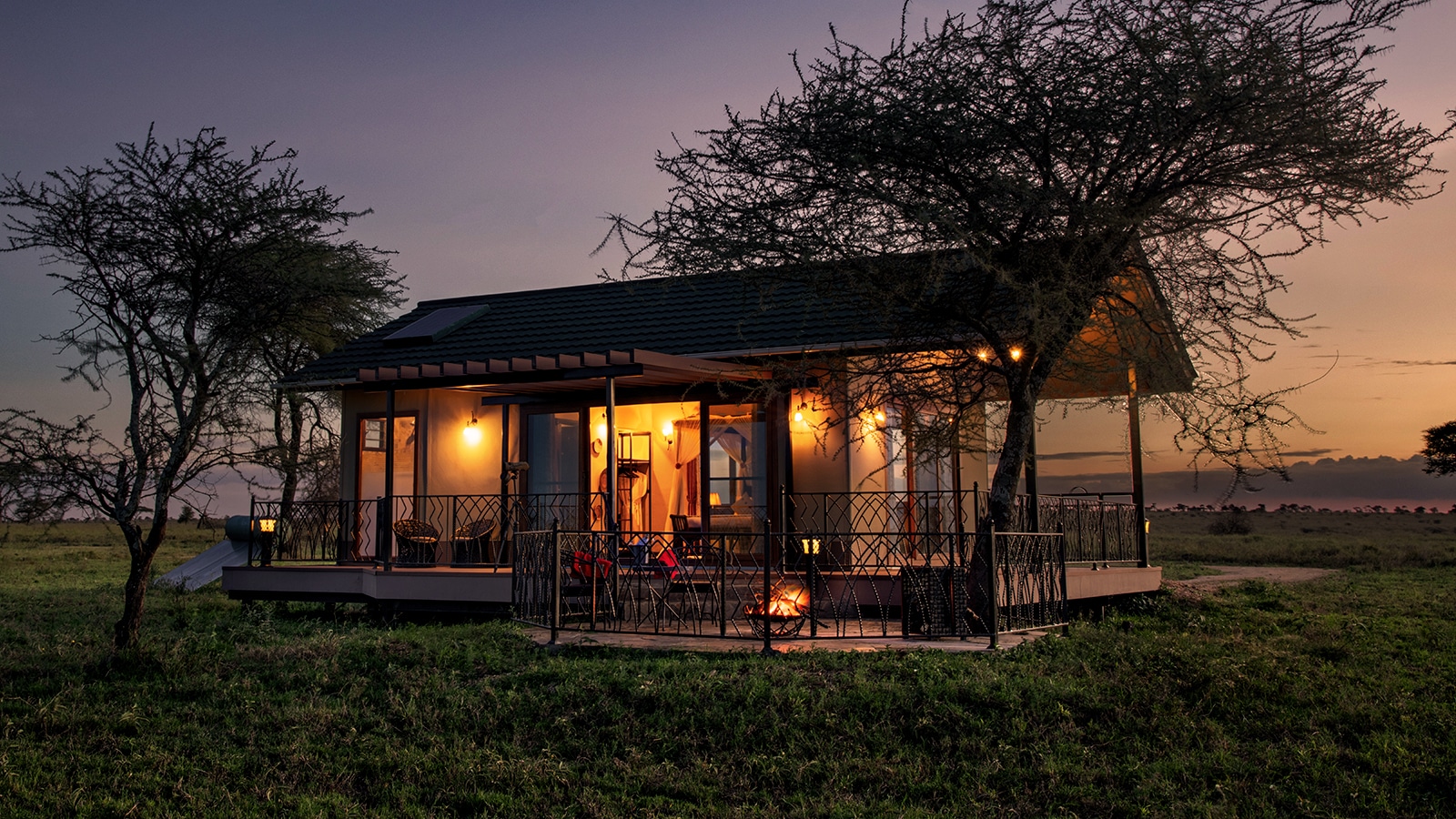
A tented camp is accommodation built primarily from canvas, though the term covers a wide spectrum of experiences. At the luxury end, a tented camp can be as comfortable as any five-star hotel — king-size beds, Persian rugs, copper bathtubs, and private decks overlooking the savanna. The difference is that all of this exists within a canvas structure that allows you to hear, smell, and feel the bush around you in a way that solid walls simply cannot replicate.
Tented camps are typically smaller than lodges, with six to twelve tents being common. This smaller scale creates a more intimate atmosphere and means fewer vehicles on game drives, less noise in communal areas, and a stronger sense of connection with the landscape. Many tented camps are positioned in prime wildlife areas — along rivers, near waterholes, or within private concessions — where their lighter footprint allows placement in locations that would be impractical for permanent structures.
There are several subcategories within the tented camp world. Permanent tented camps are fixed in one location year-round and often have raised wooden platforms, proper plumbing, and electricity. Semi-permanent camps may move seasonally to follow wildlife patterns, particularly the Great Migration in the Serengeti-Mara ecosystem. Mobile camps are the most adventurous option, relocating frequently and offering a more expedition-style experience with simpler amenities.
Atmosphere and Immersion
This is where the most significant difference lies. A lodge creates a clear separation between you and the wilderness. You step inside, close the door, and you are in a controlled environment. The sounds of the bush are muted. The temperature is regulated. You could, in theory, forget you are in Africa.
A tented camp does the opposite. Canvas walls breathe. You hear the rustle of wind, the calls of birds, the footsteps of animals passing nearby. At night, the sounds of the bush are your soundtrack — the whooping of hyenas, the distant roar of a lion, the chirping of frogs after rain. For many travelers, this sensory immersion is the entire point of safari. It transforms the experience from a wildlife viewing trip into something deeper and more connected.
This immersion is not for everyone, and that is perfectly fine. Some travelers find the sounds of the bush at night unsettling rather than magical. Others prefer the security of solid walls, particularly if they are light sleepers or traveling with young children. There is no wrong answer — only the answer that is right for you.
Comfort and Amenities
The comfort gap between lodges and tented camps has narrowed dramatically over the past two decades. Top-end tented camps now offer amenities that rival or exceed many lodges: heated plunge pools on private decks, indoor and outdoor showers, butler service, and gourmet dining. The difference is in the delivery, not the quality.
That said, lodges generally offer more extensive shared facilities. A large lodge might have a full-service spa, a gym, multiple restaurants, a wine cellar, and a curated library. Tented camps tend to focus their investment on the individual tent experience and the guiding, with simpler communal areas that emphasize the outdoor setting.
For travelers who value luxury amenities, both options can deliver at the highest level. The question is whether you prefer your luxury wrapped in stone and glass or in canvas and wood.
| Feature | Safari Lodge | Tented Camp | |---|---|---| | Structure | Permanent brick, stone, timber | Canvas on platforms or ground | | Typical size | 20-50 rooms | 6-12 tents | | Climate control | Air conditioning, heating | Natural ventilation, fans, hot water bottles | | Shared facilities | Pool, spa, gym, multiple dining areas | Pool (sometimes), single dining area, fire pit | | Sound insulation | High — solid walls | Low — canvas breathes, bush sounds audible | | Wildlife proximity | Moderate — fenced or buffered | High — wildlife moves through camp | | Best for | Families, first-timers, comfort-focused travelers | Repeat visitors, immersion seekers, photographers |
Done Reading? Let's Build Your Safari.
Skip the guesswork. Work with an advisor who has been on the ground across East and Southern Africa.
Plan With UsWildlife Access and Location
Tented camps often have an advantage when it comes to wildlife proximity. Their lighter construction and smaller footprint allow them to be placed in locations where building a permanent lodge would be impractical, environmentally damaging, or prohibited. Many of Africa's best tented camps sit directly within prime wildlife corridors, meaning animals regularly walk through or past the camp itself.
In the Masai Mara, for example, some tented camps along the Mara River are positioned so close to crossing points that guests can watch wildebeest crossings from their tent veranda during the migration season. In Botswana's Okavango Delta, water-based tented camps provide access to channels and islands that are unreachable by road.
Lodges can also be superbly positioned — the crater-rim lodges at Ngorongoro and the waterhole lodges in Etosha are proof of that. But in general, tented camps offer more flexibility in placement and are more likely to be located in the heart of the action rather than on its edge.
Cost Considerations
Pricing varies enormously across both categories, and there is no simple rule that one is cheaper than the other. A basic tented camp in Tanzania might cost $300 per person per night, while a top-end tented camp in Botswana could exceed $2,000 per person per night. Similarly, lodges range from budget-friendly options in South Africa to ultra-luxury properties that rival the most expensive hotels in the world.
As a general pattern, mobile and semi-permanent tented camps at the budget and mid-range level tend to be slightly less expensive than equivalent lodges, because their infrastructure costs are lower. At the luxury end, the pricing is comparable, and in some cases tented camps command a premium because of their exclusivity and prime locations.
The most important cost factor is not the accommodation type but the destination and the level of exclusivity. A mid-range lodge in a busy national park will almost always be less expensive than a luxury tented camp in a private concession, regardless of the structural differences. Our safari cost guides provide detailed breakdowns by country and accommodation level.
Conservation and Environmental Impact
Tented camps generally have a smaller environmental footprint than permanent lodges. Canvas structures can be erected and removed without permanent alteration to the landscape. Mobile camps, in particular, leave virtually no trace when they relocate. This matters in sensitive ecosystems where minimizing human impact is a priority.
Many tented camps operate on solar power, use rainwater harvesting, and implement waste management systems that are designed for remote locations. Lodges can and do implement similar sustainability practices, but their permanent foundations, concrete, and larger infrastructure inherently require more resources to build and maintain.
For travelers who prioritize conservation and sustainability, the accommodation choice is worth considering as part of a broader approach to responsible travel.
Which Should You Choose?
The right choice depends on your priorities, your travel companions, and what you want from the experience. Here are some practical guidelines:
Choose a lodge if you are traveling with young children who need a secure, predictable environment. If you are a first-time safari traveler who wants the reassurance of familiar hotel-style comforts. If you value extensive shared facilities like a spa, pool, and multiple dining options. If you are a light sleeper who prefers solid walls and climate control.
Choose a tented camp if you want maximum immersion in the African bush. If you are a photographer who values proximity to wildlife and smaller group sizes. If you are a repeat safari visitor looking for a deeper, more connected experience. If you appreciate the romance and tradition of classic safari travel. If you want to stay in prime wildlife locations that lodges cannot access.
Consider mixing both across a multi-stop itinerary. Many experienced safari travelers combine a tented camp in a remote wildlife area with a lodge in a more accessible location. This gives you the best of both worlds — deep bush immersion and comfortable recovery — within a single trip. A safari planning guide can help you design an itinerary that balances these elements based on your specific preferences and the destinations you plan to visit.
Final Thoughts
There is no universally better option between safari lodges and tented camps. Both can deliver extraordinary experiences when they are well-run, well-located, and well-matched to the traveler. The key is to understand what each offers and to choose based on what matters most to you. The accommodation is not just where you sleep on safari — it is a fundamental part of how you experience Africa.
Written & Reviewed By
Philips Okot
Former safari guide from Uganda and founder of Safari Intelligence. Philips has spent years guiding travelers across East and Southern Africa and now provides independent safari advisory services to help travelers plan with confidence.
Need Expert Safari Guidance?
Get expert advisory support from a firm founded by a former safari guide — with real operational knowledge across 9 African countries and full-journey accountability.
Related Planning Guides
Explore Related Topics
Recommended Reading
 Safari Comparison Articles
Lodge Safari vs Tented Camp Safari
An in-depth comparison of Lodge Safari vs Tented Camp Safari to help you choose the perfect safari experience. Explore the pros, cons, and key differences to ma
 Safari Advisor Content
How a Safari Advisor Helps You Choose the Right Lodge
Discover the essentials of how a safari advisor helps you choose the right lodge for an unforgettable African safari adventure.
 Safari Cost Guides
Safari Cost Comparison Lodge vs Tented Camp
Learn about safari cost comparison lodge vs tented camp in this comprehensive safari guide covering key insights and practical advice.
 Safari Planning Guides
How to Choose Between a Lodge Safari and Camping Safari
Discover how to plan your dream safari with our expert guide on How to Choose Between a Lodge Safari and Camping Safari. Get tips on destinations, costs, and more.
 Luxury Safari Content
How to Choose a Luxury Safari Lodge
A comprehensive guide to How to Choose a Luxury Safari Lodge. Learn everything you need to know for your safari adventure.
 Safari Advisor Content
How a Safari Advisor Helps You Choose the Right Destination
Discover the essentials of how a safari advisor helps you choose the right destination for an unforgettable African safari adventure.