

A comprehensive guide to Complete Guide to Termite Mounds on Safari. Learn about its habitat, behavior, diet, and conservation status.
Complete Guide to Termite Mounds on Safari
When it comes to complete guide to termite mounds on safari, there is no shortage of opinions. This evidence-based guide cuts through the noise to give you actionable, trustworthy information for your safari planning.
Common Mistakes to Avoid: Complete Guide to Termite Mounds on Safari
One of the most frequent mistakes travelers make with complete guide to termite mounds on safari is waiting too long to start planning. Popular safari destinations and lodges book up months in advance, especially during peak season. Last-minute planning often results in limited options and higher costs.
Underestimating the importance of complete guide to termite mounds on safari is perhaps the biggest mistake of all. Travelers who give this aspect of their safari proper attention consistently report more satisfying experiences than those who treat it as an afterthought.
Another common error is relying solely on online reviews without consulting experienced professionals. While traveler reviews provide valuable perspectives, they often lack the context and expertise that a qualified safari planning guide can offer. The best approach combines both sources of information.
Still researching? Let us help.
Our advisory team has planned safaris across 9 African countries. We can turn your research into a real plan.
Talk to an AdvisorSeasonal Factors and Timing: Complete Guide to Termite Mounds on Safari
The timing of your safari significantly impacts complete guide to termite mounds on safari. Dry season months, typically June through October in most East African destinations, offer different conditions than the green season months of November through May. Each period has distinct advantages and considerations.
Weather patterns across Africa are becoming less predictable due to climate change, which adds another layer of consideration to complete guide to termite mounds on safari. Working with operators who have current, on-the-ground knowledge of conditions is more important than ever.
Expert Recommendations
Budget considerations play an important role in complete guide to termite mounds on safari. While it is tempting to cut corners, experienced travelers consistently report that investing in quality where it matters most leads to significantly better outcomes. The key is knowing where to allocate your budget for maximum impact.
Safari advisors consistently recommend starting your planning process at least six to twelve months before your intended travel dates. This lead time allows you to secure preferred accommodations, take advantage of early booking rates, and properly prepare for all aspects of complete guide to termite mounds on safari.
Understanding the Fundamentals
The foundation of complete guide to termite mounds on safari begins with understanding the basic principles. Safari environments across Africa present unique conditions that differ significantly from what most travelers are accustomed to. In East Africa, the vast savannas of Kenya and Tanzania create one set of considerations, while the dense forests of Uganda and Rwanda present entirely different challenges. Southern African destinations like Botswana and South Africa add yet another dimension.
Experienced safari operators emphasize that preparation is the single most important factor in complete guide to termite mounds on safari. This means doing your research well in advance, consulting with knowledgeable advisors, and being willing to adapt your plans based on current conditions. The best safari experiences come from travelers who approach their journey with both enthusiasm and informed flexibility.
Done Reading? Let's Build Your Safari.
Skip the guesswork. Work with an advisor who has been on the ground across East and Southern Africa.
Plan With UsRelated Resources
For more information on planning your safari, explore our destination guides, browse the safari operator directory, or connect with an experienced safari planning guide for personalized guidance.
The Architects: Which Termite Species Build the Great Mounds?
While thousands of termite species exist globally, the colossal mounds that punctuate the African safari landscape are primarily the work of a few highly advanced groups. The most prolific architects belong to the genus Macrotermes, with species like Macrotermes bellicosus and Macrotermes subhyalinus being the master builders. These are known as fungus-growing termites due to their remarkable symbiotic relationship with a specific type of fungus, Termitomyces.
This is not merely a casual partnership; it is a form of advanced agriculture. The termites cultivate these fungi in specialized chambers within the mound, feeding them chewed-up wood and plant matter. In return, the fungus breaks down the tough cellulose and lignin, converting it into a nutrient-rich food source that the termites can easily digest. The mound itself is a marvel of engineering, designed to maintain the precise temperature and humidity required for the fungal gardens to thrive. The intricate network of tunnels and vents acts as a sophisticated HVAC system, regulating gas exchange and creating a stable internal microclimate, a testament to the colony's collective intelligence.
> Expert Insight: A Self-Sustaining Fortress > The relationship between Macrotermes termites and their fungal cultivars is so efficient that the colony becomes a nearly self-sustaining ecosystem. This agricultural prowess allows colonies to grow to immense sizes, numbering in the millions, and construct mounds that can stand for over a century, long after the founding queen has perished.
Termite Mounds as a Safari Landmark: Where to See the Most Impressive Structures
Termite mounds are a ubiquitous feature of the African savanna, but certain regions are renowned for their particularly grand or unusually shaped structures. For travelers seeking to witness these natural skyscrapers, some destinations stand out.
- Kafue National Park, Zambia: The Busanga Plains in Kafue are famous for their large, conical termite mounds that rise like ancient cathedrals from the seasonally flooded grasslands. These mounds become critical islands of dry land for wildlife during the wet season and offer exceptional photographic opportunities.
- Tarangire National Park, Tanzania: Tarangire is another hotspot, where mounds are not only numerous but also frequently used by the park's abundant wildlife. Here, it is common to see lions lounging on the warm clay slopes or dwarf mongooses using a mound as a fortified apartment complex.
- Kidepo Valley National Park, Uganda: In the arid landscapes of Kidepo, the mounds take on a different character. They are often stark, reddish structures that stand in dramatic contrast to the golden grasses, providing essential lookout points for predators in this open environment.
Exploring these areas with a knowledgeable guide from our safari operators can transform a simple sighting into a deep ecological lesson. Understanding the regional variations adds another layer of appreciation to your safari journey.
Beyond the Builders: The Ecosystem of the Termite Mound
An active termite mound is far more than just a home for its builders; it is a central hub of biodiversity that supports a vast web of other species. The stable temperatures and fortified structure make abandoned chambers and external crevices prime real-estate for a host of opportunistic residents.
Monitor lizards and various snake species will often take up residence in the lower, cooler chambers to escape the midday sun or to lay their eggs in a protected environment. Smaller mammals, most notably the banded and dwarf mongoose, frequently colonize mounds, converting them into bustling fortresses with multiple entrances and exits. They benefit from the termites' construction, gaining a secure home without the effort of excavation.
Even birds find use for these structures. The White-fronted Bee-eater may excavate nesting tunnels into the sides of mounds, while kingfishers and rollers use the peaks as convenient perches for spotting insects and other small prey. The mound is a landlord to many, creating a complex, multi-species community.
A Predator's Perch: How Carnivores Use Mounds for Hunting
For Africa's predators, a termite mound is a strategic asset. In the vast, often flat expanses of the savanna, any elevation provides a significant advantage. A termite mound serves as a natural watchtower, allowing carnivores to survey the surrounding landscape for potential prey or rival predators.
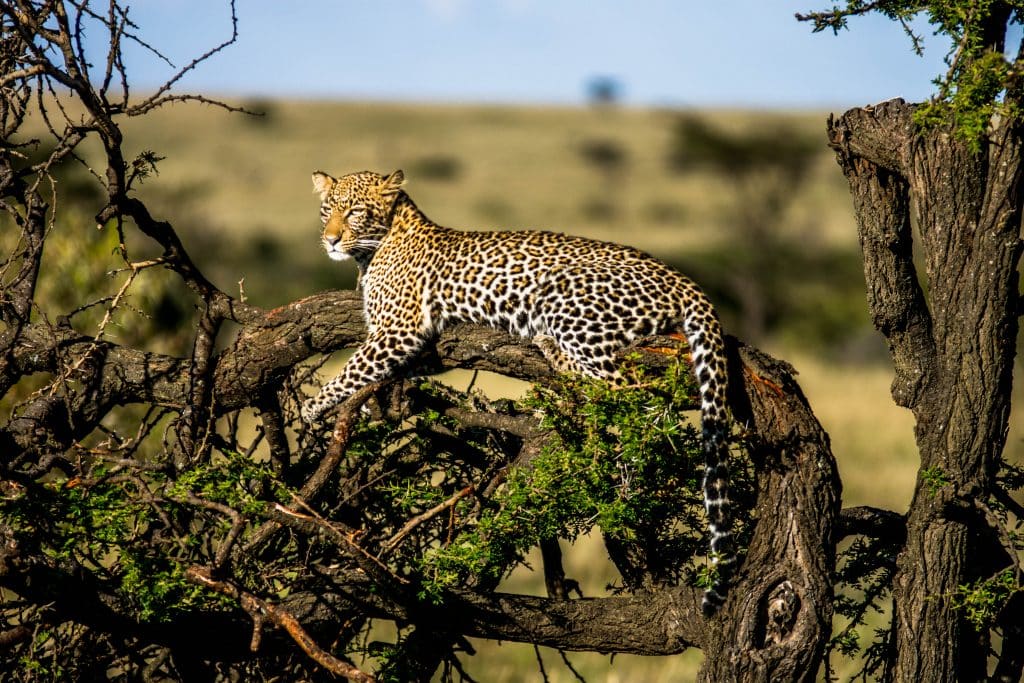
Cheetahs, with their reliance on sight for hunting, are famously pictured using mounds to scan for herds of gazelle or impala. A few extra feet of height can mean the difference between spotting a distant meal and going hungry. Lions, particularly dominant males, will often rest on mounds to keep a lazy eye on their territory and pride members. Leopards, though more elusive, also use them as vantage points, especially in more open woodland areas.
> Traveler's Tip: Spotting Predators in Plain Sight > When on a game drive, make it a habit to scan every termite mound you pass. Your eyes are naturally drawn to movement in the grass, but predators are masters of stillness. A seemingly inanimate lump on the side of a mound could easily be a resting lion or a watchful cheetah. Train your eyes to look for the distinct shape and outline of a cat against the reddish-brown clay.
The Mound as a Food Source: Not Just for Termites
While termites diligently cultivate their own food, they themselves are a protein-rich meal for a fascinating array of specialized insectivores. The most famous of these is the aardvark, a nocturnal creature perfectly adapted for breaking into the concrete-hard walls of a mound with its powerful claws and lapping up termites with its long, sticky tongue.
Other specialists include the pangolin, Africa's scaled anteater, and the aardwolf, a species of hyena that feeds almost exclusively on termites. These animals play a crucial role in regulating termite populations. During the rainy season, termite colonies produce winged reproductives, or alates, which emerge in massive swarms for their nuptial flight. This event triggers a feeding frenzy, attracting everything from birds and bats to baboons and even humans, who collect the protein-rich insects.
This cycle of predation is a vital part of the savanna ecosystem, and witnessing it provides a deeper understanding of the intricate food web. For more insights into planning a safari that maximizes these unique wildlife encounters, visit our knowledge center or plan your safari with our expert team.
Need Expert Safari Guidance?
Get expert advisory support from a firm founded by a former safari guide — with real operational knowledge across 9 African countries and full-journey accountability.
Related Planning Guides
Explore Related Topics
Recommended Reading
 Wildlife Guides
Complete Guide to Safari Ant Species
A comprehensive guide to Complete Guide to Safari Ant Species. Learn about its habitat, behavior, diet, and conservation status.
 Wildlife Guides
Complete Guide to Butterfly Species on Safari
A comprehensive guide to Complete Guide to Butterfly Species on Safari. Learn about its habitat, behavior, diet, and conservation status.
 Destination Guides
Complete Guide to Garden Route Safari Options
A complete guide to Complete Guide to Garden Route Safari Options. Learn about the wildlife, activities, and best time to visit this amazing destination.
 Country Guides
Complete Safari Guide to Tanzania
Your complete guide to Complete Safari Guide to Tanzania. Find the best destinations, planning tips, and more for your next safari adventure.
 Country Guides
Complete Safari Guide to Kenya
Your complete guide to Complete Safari Guide to Kenya. Find the best destinations, planning tips, and more for your next safari adventure.
 Country Guides
Complete Safari Guide to Botswana
Your complete guide to Complete Safari Guide to Botswana. Find the best destinations, planning tips, and more for your next safari adventure.