Master your gorilla trekking photography with our expert tips on camera gear, settings, and composition for capturing stunning images in the wild.
Capturing Mountain Gorillas Through Your Lens
Photographing mountain gorillas in their natural habitat is one of the most extraordinary photographic experiences available anywhere in the world. These gentle giants, found only in the forests of Uganda, Rwanda, and the Democratic Republic of Congo, offer intimate encounters that produce deeply emotional and powerful images.
However, gorilla trekking photography presents unique challenges. Dense forest environments, unpredictable lighting, close proximity to subjects, and strict time limits all require specific preparation and technique.
Understanding the Environment
Forest Conditions
Mountain gorillas live in dense tropical and bamboo forests at elevations between 2,400 and 4,000 meters. The forest canopy creates challenging lighting conditions with deep shadows punctuated by occasional shafts of light. Humidity is high, and rain can occur at any time.
These conditions demand camera equipment that performs well in low light and can handle moisture. Understanding how to work with dappled forest light is essential for successful gorilla photography.
The One-Hour Rule
Once you locate a gorilla family, you have exactly one hour for observation and photography. This strict time limit is designed to minimize stress on the gorillas and is non-negotiable. Every minute counts, so you must be prepared and efficient with your photography.
Not Sure Where to Start?
Start HereCamera Equipment Recommendations
Camera Body
A camera body with excellent high-ISO performance is essential. You will frequently shoot at ISO 3200 to 12800 in the dim forest environment. Full-frame sensors generally perform better in these conditions, but modern APS-C cameras with good high-ISO capability are also suitable.
Weather sealing is highly recommended given the humid, potentially rainy conditions. Bring a rain cover for your camera as additional protection.
Lenses
Unlike open savanna safari photography, gorilla trekking requires shorter focal lengths due to the close proximity of subjects, often just 5 to 10 meters away.
- A 24-70mm f/2.8 zoom is the most versatile lens for gorilla trekking
- A 70-200mm f/2.8 provides reach for more distant subjects and tight portraits
- A fast prime lens such as a 50mm f/1.4 or 85mm f/1.8 excels in low light
- Wide-angle lenses can capture environmental portraits showing gorillas in their forest habitat
Essential Accessories
- Extra batteries, as cold temperatures at altitude drain batteries faster
- Multiple memory cards
- Lens cleaning cloth for humidity and rain droplets
- Camera rain cover or waterproof bag
- Comfortable camera strap that allows quick access
Photography Techniques
Exposure Settings
Shoot in aperture priority or manual mode. Use wide apertures (f/2.8 to f/4) to maximize light gathering and create pleasing background blur. Accept higher ISO values to maintain adequate shutter speeds.
Minimum shutter speed should be 1/250 second for stationary gorillas and 1/500 second or faster for moving subjects. Gorillas can move surprisingly quickly, and motion blur ruins otherwise excellent shots.
Focus Strategies
Use continuous autofocus to track moving gorillas. Focus on the eyes whenever possible, as sharp eyes are critical for compelling wildlife portraits. In dense vegetation, single-point autofocus prevents the camera from locking onto foreground branches.
Composition Tips
- Include environmental context to tell a story about the gorillas' habitat
- Capture behavioral moments such as feeding, grooming, and play
- Photograph silverbacks from slightly below eye level for powerful portraits
- Look for emotional connections between family members
- Use natural light shafts as spotlights on your subjects
Ethical Photography Practices
- Never use flash, as it can disturb and disorient gorillas
- Maintain the required 7-meter minimum distance at all times
- Avoid sudden movements or loud shutter sounds
- Do not attempt to attract gorillas' attention for better photos
- Respect your guide's instructions regarding positioning and behavior
Post-Processing Tips
Gorilla trekking images often benefit from careful post-processing to handle the challenging lighting conditions. Noise reduction for high-ISO images, selective exposure adjustments to balance shadows and highlights, and careful color correction for the green-dominated forest environment can significantly improve your final images.
Explore Related Topics
Recommended Reading
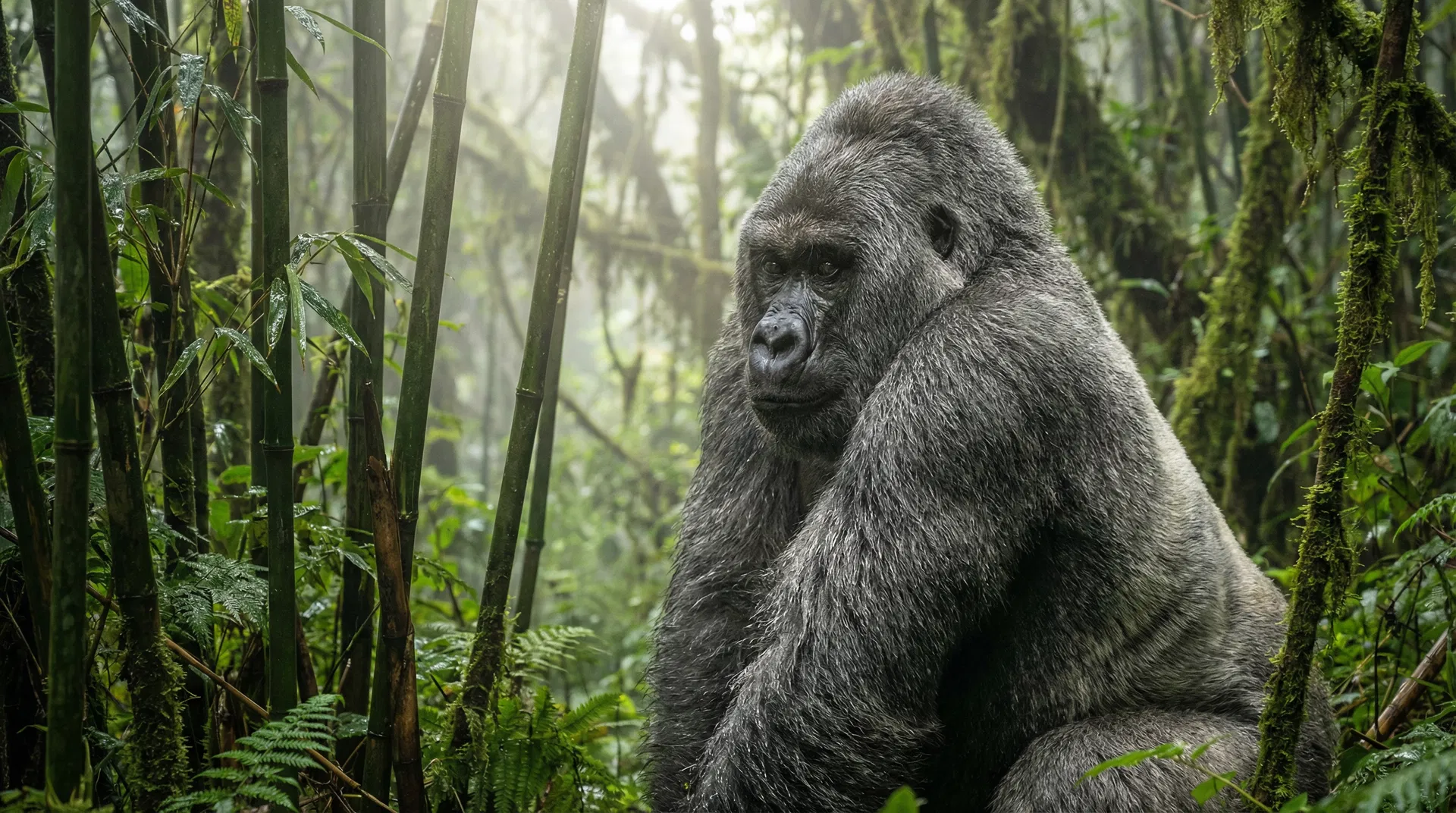 Gorilla Trekking
Gorilla Trekking in Uganda Guide
Our comprehensive guide to gorilla trekking in Uganda covers everything from booking permits and the best time to visit to what to expect on your trek.
6 min readGorilla TrekkingGorilla Trekking in Rwanda Guide
Planning a gorilla trekking adventure in Rwanda? Our guide covers everything from booking permits and the best time to visit to what to pack for your trek.
6 min readGorilla TrekkingGorilla Trekking Packing Guide
Planning a gorilla trekking adventure? Our comprehensive packing guide covers the essential clothing, footwear, and gear you need for a safe and unforgettable experience.
7 min read Safari Cost Guides
Why Rwanda Gorilla Trekking Is More Expensive Than Uganda
Learn about why rwanda gorilla trekking is more expensive than uganda in this comprehensive safari guide covering key insights and practical advice.
5 min read Safari Comparison Articles
Uganda vs Rwanda – Gorilla Trekking Comparison
Learn about uganda vs rwanda – gorilla trekking comparison in this comprehensive safari guide covering key insights and practical advice.
6 min read Safari Costs
Gorilla Trekking Cost Guide
A comprehensive guide to gorilla trekking costs in Africa. Learn about permit fees, tour prices, and what's included in your trip to Uganda, Rwanda, or Congo.
7 min read