
Learn about best african airlines for safari connections and how it can impact your safari experience. Get expert advice and start planning your dream safari today.
Best African Airlines for Safari Connections
This is the content for the article: Best African Airlines for Safari Connections.
This article is in the category: Travel Logistics.
Here are some internal links:
Navigating the Skies: A Strategic Guide to African Air Travel for Your Safari
Planning an African safari is an exhilarating experience, but the logistics of getting to and around this vast continent can be complex. While international flights bring you to the continent’s major hubs, the real adventure often begins with the smaller, regional flights that connect you to the heart of the wilderness. Understanding the nuances of African air travel is crucial for a seamless and efficient safari journey. This guide provides expert insights into the best airlines for safari connections, from major international carriers to the vital regional airlines that make remote destinations accessible.
Choosing the right airline is more than a matter of convenience; it’s a strategic decision that can significantly impact your safari experience. The right connections mean less time in transit and more time in the bush, maximizing your opportunities for wildlife viewing and relaxation. This is where the expertise of our safari operators becomes invaluable, as they can navigate the intricate web of flight schedules and airline networks to design the perfect itinerary for you.
The Two Tiers of African Air Travel: International Hubs and Regional Connectors
African air travel for safari enthusiasts can be broadly categorized into two tiers: major international hubs and regional/bush airlines. The international hubs, such as Nairobi’s Jomo Kenyatta International Airport (NBO), Johannesburg’s O.R. Tambo International Airport (JNB), and Addis Ababa’s Bole International Airport (ADD), are the primary entry points for travelers from across the globe. These airports are served by a wide range of international airlines, offering competitive pricing and multiple flight options.
However, the real magic of a safari often lies in the more remote, less-traveled destinations. This is where the second tier of airlines—the regional and bush carriers—comes into play. These smaller airlines are the lifeblood of the safari industry, providing essential connections from the major hubs to the national parks and private conservancies that are home to Africa’s most iconic wildlife. Without these airlines, many of the continent’s most pristine wilderness areas would be virtually inaccessible.
> Expert Insight: When planning your safari, it’s essential to consider both international and regional flights. While your international ticket may get you to Africa, it’s the local carriers that will get you to the heart of the action. Our safari cost calculator can help you budget for both, ensuring a smooth and stress-free journey.
Still researching? Let us help.
Our advisory team has planned safaris across 9 African countries. We can turn your research into a real plan.
Talk to an AdvisorThe Giants of the African Sky: Major International Airlines and Hubs
Your African safari adventure begins the moment you step onto your international flight. Several major airlines offer excellent connectivity to the continent's primary safari hubs, each with its own set of advantages in terms of routes, service, and cost. Here’s a closer look at the key players connecting the world to Africa's wild heart.
Ethiopian Airlines (ET)
Primary Hub: Addis Ababa Bole International Airport (ADD)
Ethiopian Airlines has emerged as a dominant force in African aviation, boasting the most extensive network across the continent. From its hub in Addis Ababa, the airline connects to over 60 African cities, making it a strategic choice for travelers looking to explore multiple destinations. The airline is a member of the Star Alliance, which allows for seamless connections and mileage accrual with partner airlines. While Addis Ababa may not be a primary safari destination itself, its strategic location makes it an excellent gateway to East Africa, with frequent connections to Nairobi, Kilimanjaro, and Entebbe.
Kenya Airways (KQ)
Primary Hub: Jomo Kenyatta International Airport (NBO), Nairobi
As the flag carrier of Kenya, Kenya Airways is a natural choice for safaris in East Africa. Its hub in Nairobi is the primary gateway to the iconic Maasai Mara, Amboseli, and the Laikipia Plateau. A member of the SkyTeam alliance, Kenya Airways offers direct flights from New York (JFK) to Nairobi, providing a convenient option for North American travelers. The airline's extensive regional network, in partnership with its subsidiary Jambojet, makes it easy to connect to coastal destinations like Mombasa and Diani, perfect for a post-safari beach extension.
South African Airways (SA)
Primary Hub: O.R. Tambo International Airport (JNB), Johannesburg
South African Airways has long been a key player in connecting the world to Southern Africa. While the airline has faced financial challenges, it remains a vital link to the region's premier safari destinations, including Kruger National Park, the Sabi Sands, and Victoria Falls. Johannesburg serves as the primary hub for accessing Botswana, Namibia, Zambia, and Zimbabwe. The airline's partnership with a wide range of regional carriers ensures that even the most remote camps are within reach.
Middle Eastern Carriers: Emirates, Qatar Airways, and Turkish Airlines
These three airlines have revolutionized long-haul travel to Africa, offering world-class service and extensive networks through their respective hubs in Dubai (DXB), Doha (DOH), and Istanbul (IST). They provide one-stop connections from virtually any major city in the world to a wide range of African destinations. Their modern fleets, competitive pricing, and high standards of comfort make them a popular choice for safari-goers.
- Emirates: With its massive hub in Dubai, Emirates offers extensive connections to East and Southern Africa, including Nairobi, Dar es Salaam, and Johannesburg.
- Qatar Airways: A member of the oneworld alliance, Qatar Airways provides excellent connectivity to Kilimanjaro (JRO) for Tanzanian safaris, as well as to Cape Town and Johannesburg.
- Turkish Airlines: Known for its expansive network, Turkish Airlines flies to more African destinations than any other non-African airline, making it a versatile option for reaching less-common safari destinations.
> Traveler's Tip: When choosing your international airline, consider not only the cost but also the layover times and the convenience of the connections. A well-planned route can save you a full day of travel, giving you more time to enjoy your safari. Our safari operators can help you find the optimal flight path for your itinerary.
The Unsung Heroes: Regional and Bush Airlines
While international carriers get you to the continent, it's the regional and bush airlines that deliver you to the doorstep of the wilderness. These smaller, often privately-owned airlines are the logistical backbone of the safari industry, operating fleets of light aircraft to connect major airports with remote airstrips in national parks and conservancies. Flying in these smaller planes is an adventure in itself, offering breathtaking aerial views of the landscapes you're about to explore.
Key Regional Airlines in East Africa
East Africa, particularly Kenya and Tanzania, has a well-developed network of regional airlines that make hopping between parks a breeze. This is crucial for itineraries that combine multiple destinations, such as the Serengeti and the Maasai Mara, or for reaching remote camps that are a full day's drive from the nearest city.
- Safarilink and AirKenya: These two airlines are the dominant players in Kenya's domestic safari circuit. Operating out of Wilson Airport (WIL) in Nairobi—a smaller airport dedicated to light aircraft—they offer scheduled flights to virtually every major park and conservancy in the country, including the Maasai Mara, Amboseli, Samburu, and Laikipia. Their services are reliable, safe, and efficient, turning what would be a long and arduous road journey into a short and scenic flight.
- Coastal Aviation and Auric Air: In Tanzania, Coastal Aviation and Auric Air are the go-to carriers for accessing the country's vast northern and southern safari circuits. From their hubs in Arusha (ARK) and Dar es Salaam (DAR), they fly to the Serengeti, Ngorongoro Crater, Tarangire, Ruaha, and Selous. They also play a vital role in connecting the mainland to the spice island of Zanzibar, a popular post-safari destination.
Connecting the Great Migration: A Cross-Border Challenge
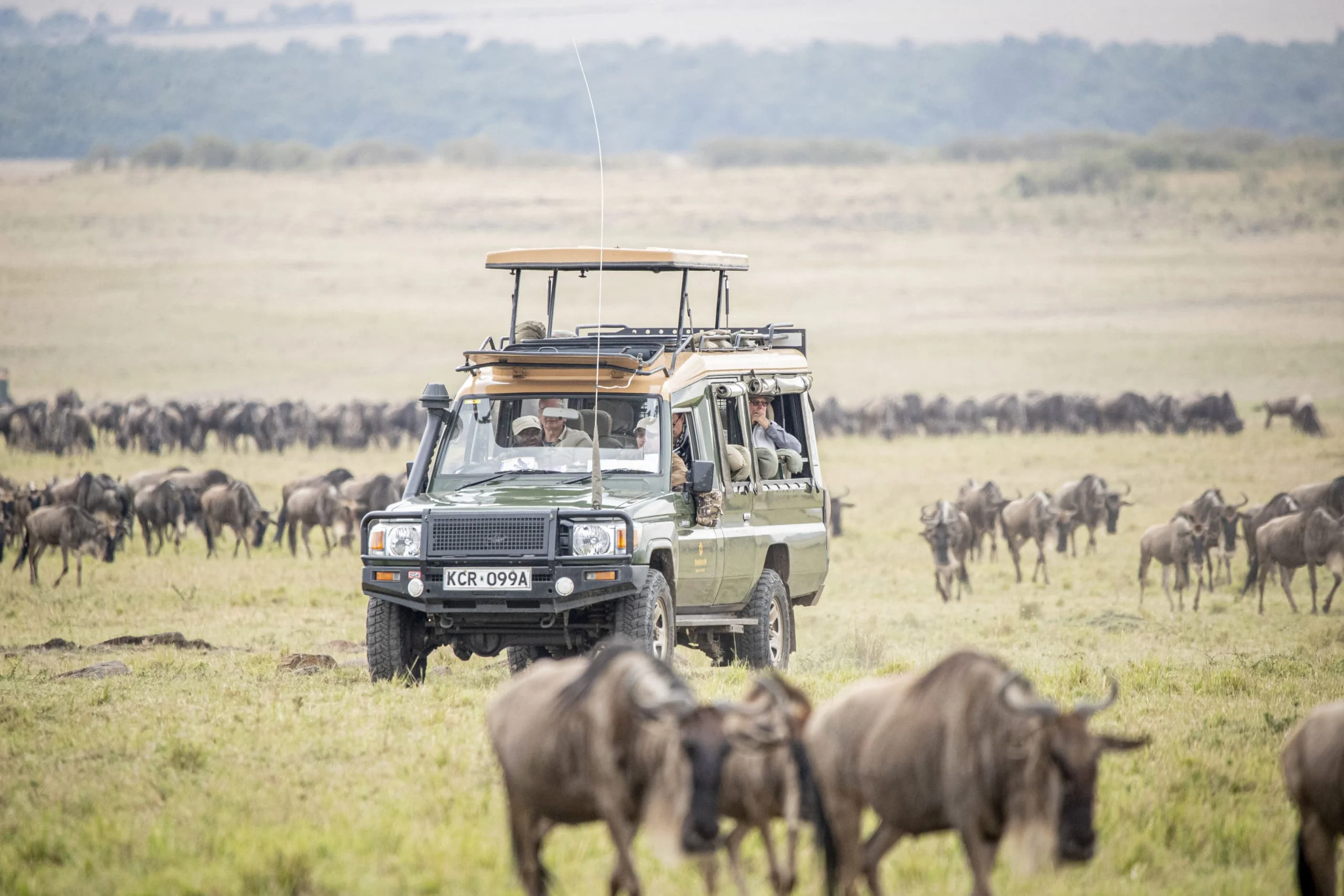
One of the most sought-after safari experiences is witnessing the Great Migration of wildebeest and zebra between the Serengeti in Tanzania and the Maasai Mara in Kenya. While the two ecosystems are contiguous, there are no direct international flights between them. This is where the bush airlines, in coordination with ground operators, provide a clever solution. Travelers can fly from the Serengeti to the Tarime/Migori border, cross into Kenya via a short road transfer, and then take another bush flight from there to the Maasai Mara. This seamless connection, orchestrated by our expert safari operators, allows you to follow the migration's path without the need for a long and time-consuming detour through major international airports.
Regional Airlines in Southern Africa
Southern Africa's safari landscape is more spread out, making regional flights even more critical. Airlines like Airlink and Air Botswana are essential for connecting major hubs like Johannesburg and Cape Town to the Okavango Delta, Chobe National Park, and Victoria Falls.
- Airlink: This South African airline has an extensive network that covers many of the region's top safari destinations. It offers direct flights from Johannesburg and Cape Town to Maun (MUB) and Kasane (BBK) in Botswana, the gateways to the Okavango Delta and Chobe, respectively. Airlink also provides convenient connections to Victoria Falls (VFA) in Zimbabwe and Livingstone (LVI) in Zambia.
- Air Botswana: The national airline of Botswana provides vital links between the capital, Gaborone, and the safari hubs of Maun and Kasane. It also offers regional flights to Johannesburg and Cape Town, providing another option for accessing the country's world-renowned wildlife areas.
> Expert Insight: Luggage restrictions on bush flights are much stricter than on international carriers. Typically, you'll be limited to a total of 15-20 kg (33-44 lbs) in soft-sided bags. This is due to the small size of the aircraft and the need to maintain a safe weight and balance. It's crucial to pack light and use a duffel bag rather than a hard-shell suitcase. For more packing tips, visit our knowledge center.
Cost and Booking Strategies for Safari Flights
The cost of internal flights is a significant component of any safari budget, and it’s essential to factor in these expenses when planning your trip. While it may be tempting to book flights independently to save money, this approach can often lead to logistical headaches and unforeseen costs. This is where the value of working with a dedicated safari planning guide becomes clear.
The Hidden Value of All-Inclusive Safari Planning
At first glance, booking your own regional flights might seem like a cost-saving measure. However, the complexities of coordinating multiple flights, transfers, and accommodation check-ins can be overwhelming. A missed connection or a canceled flight could have a domino effect on your entire itinerary. Our safari operators have deep-seated relationships with the airlines and ground operators, allowing them to create a seamless, all-inclusive itinerary that takes the stress out of travel. This not only saves you time and effort but also provides a safety net in case of any unexpected disruptions.
Furthermore, our planning guides have access to wholesale and negotiated rates that are not available to the general public. This means that even with our planning fee, the overall cost of your safari is often comparable to, or even less than, what you would pay if you booked everything yourself. You can get a preliminary estimate of your total trip cost, including flights, by using our safari cost calculator.
The Importance of Booking in Advance
Safari flights, especially on the smaller bush planes, have limited capacity and fill up quickly, particularly during the peak seasons (June-September and December-February). To secure the best fares and ensure availability, it is crucial to book your flights well in advance—ideally, 6 to 12 months before your travel dates. This is especially true for popular routes, such as the connections to the Maasai Mara during the Great Migration or to the Okavango Delta in Botswana’s dry season.
A Final Word: Your Journey Starts Here
Navigating the world of African air travel is the first step in an unforgettable safari adventure. From the international giants that connect continents to the nimble bush planes that whisk you away to remote wilderness, each flight is a part of the journey. By understanding the key players and planning strategically, you can ensure a smooth, efficient, and awe-inspiring trip.
Ready to start planning your dream safari? Our team of expert safari operators is here to help you craft the perfect itinerary, from flights and accommodations to unique wildlife encounters. Plan your safari with us today and experience the magic of Africa, the right way.
Need Expert Safari Guidance?
Get expert advisory support from a firm founded by a former safari guide — with real operational knowledge across 9 African countries and full-journey accountability.
Related Planning Guides
Recommended Reading
 Travel Logistics
Best International Airlines for Safari Travel
Learn about best international airlines for safari travel and how it can impact your safari experience. Get expert advice and start planning your dream safari today.
 Season & Timing Guides
Best Time to Visit South Africa for Safari
Expert guide on best time to visit south africa for safari with month-by-month conditions, pricing, and planning recommendations for safari travelers.
 Travel Logistics
How to Get to South Africa for Safari
Learn about how to get to south africa for safari and how it can impact your safari experience. Get expert advice and start planning your dream safari today.
 Safari Planning
Step-by-Step Guide to Planning an African Safari
Learn how to plan your first African safari with our step-by-step guide. We cover everything from choosing a destination to booking your trip and packing.
 Safari Cost Guides
Safari Cost Comparison East Africa vs Southern Africa
Learn about safari cost comparison east africa vs southern africa in this comprehensive safari guide covering key insights and practical advice.
 Safari Comparison Articles
East Africa vs Southern Africa Safari Comparison
Learn about east africa vs southern africa safari comparison in this comprehensive safari guide covering key insights and practical advice.